
How To Store Organic Eggs In UAE Summer And Winter (2026): Home + Retail + HORECA
This page is written for families, retailers, and commercial buyers. The rule is the same across the chain: keep organic eggs chilled during transport and storage, and avoid temperature swings.
Both production date and expiry date are printed on each egg. The egg printing ink is certified and included in organic certification audits.
1. What Is Printed On Each Egg (And Why It Matters)
Organic eggs are handled under strict rules. That is why every egg carries clear traceability information. You will typically see both the production date and the expiry date printed on each egg, not only on the outer tray.
- 3 months expiry from production: when eggs are kept chilled and stable, expiry is set at 3 months from the production date.
- Dates printed on each egg: production date and expiry date are printed on every egg for easy checking and rotation.
- Certified printing ink: the ink used to print on eggs is certified and included in organic certification audits.
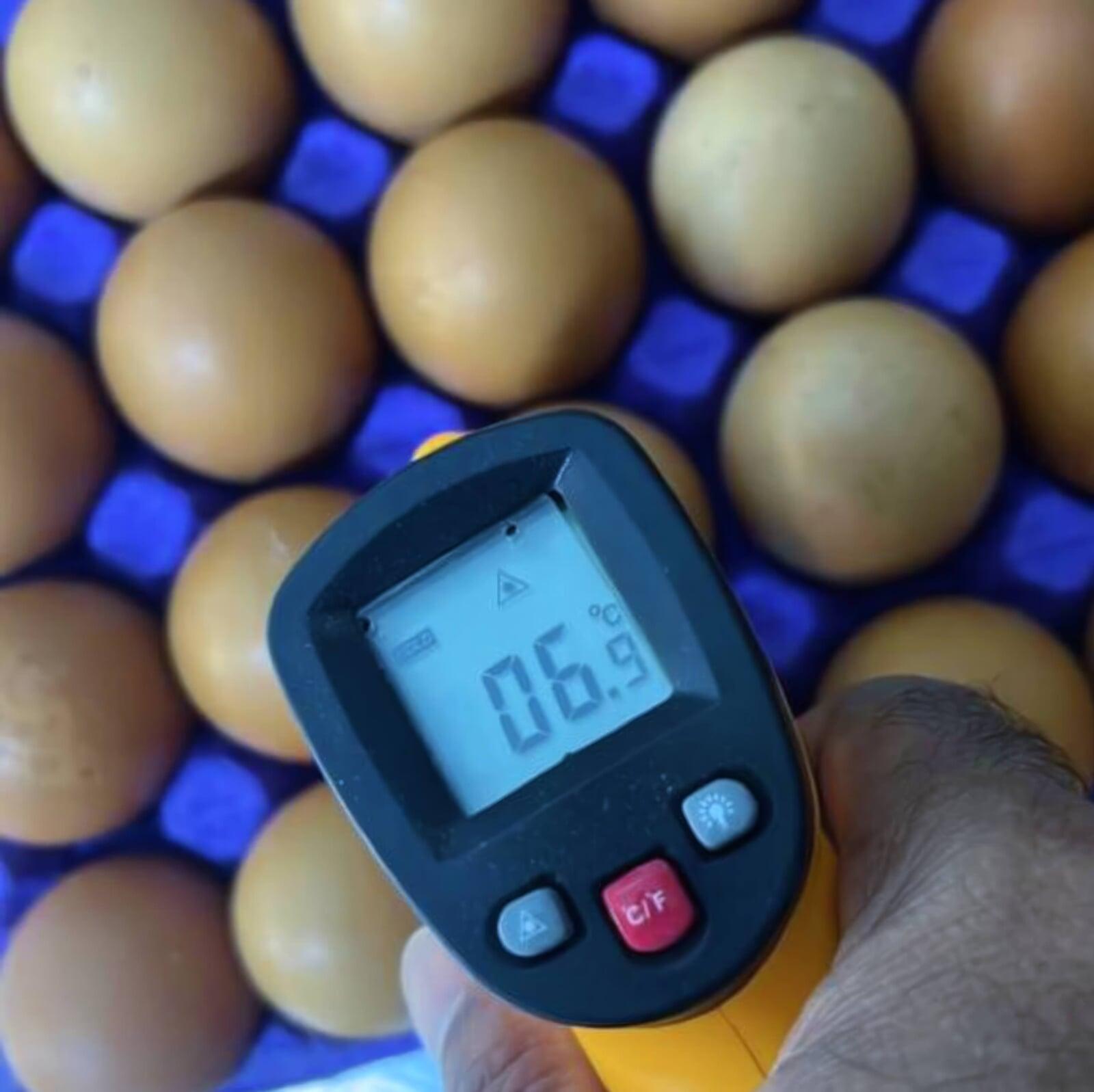
- Chilled handling instruction: store and transport within 4°C to 10°C to protect the cold chain.
2. Best Place To Store Eggs At Home (UAE)
Store eggs on an inner shelf where the temperature stays stable, and keep them in the original tray. Avoid the fridge door because it warms up repeatedly every time it opens.
- Main shelf: more stable chilled temperature than the door.
- Original tray: protects shells and reduces moisture swings.
- Fast transfer: move eggs into the fridge quickly after delivery or shopping.
3. Summer vs Winter: What Changes (And What Does Not)
The chilled range stays the same. What changes is how fast eggs warm up outside the fridge.
Summer (High Risk)
Heat and humidity can break the cold chain fast.
- Put eggs in the fridge within 30 minutes
- Do not leave eggs on the counter during cooking
- Avoid repeated warm to cold cycles
- Keep store to home time short and chilled
Winter (Easier, Still Needs Care)
Cooler weather helps, but stable chilling still wins.
- Still store eggs in the fridge for best consistency
- Avoid sunlight and warm kitchen corners
- Use first in first out using printed dates
- Do not assume AC equals safe room storage
4. For Retailers + Hotels + Restaurants + Bakeries (Wholesale & Bulk Cartons)
Many commercial buyers purchase eggs in bulk cartons, including 360 eggs per carton. For retailers and HORECA buyers, cold chain responsibility is critical because eggs may be stored longer and handled by multiple staff.
Cold Store System Checklist (Rule Of Thumb)
- Temperature log (3 times daily): opening, mid day, and closing.
- Receiving discipline: move eggs to cold store immediately after receiving.
- Rotation by dates: use printed production and expiry dates on each egg to run FIFO properly.
- Calibration certificate: temperature monitoring devices and cold room sensors should have a valid calibration certificate as a rule of thumb.
5. Shelf Life In Simple Words: 3 Months (When Kept Chilled & Stable)
In the UAE, the most practical and confidence building rule is simple: eggs carry a 3 month expiry period from the production date when they are kept within the chilled range and stored in stable conditions.
- Always check the egg print: production date and expiry date are written on each egg.
- Keep it chilled: protect the 4°C to 10°C range during storage and transport.
- Use FIFO: older eggs first, newer eggs behind, especially for bulk cartons.
Want Organic Eggs That Stay Chilled From Supply Chain To Kitchen?
Keep eggs within 4°C to 10°C, avoid temperature swings, and rotate using the production and expiry dates printed on each egg. When chilled and stable, eggs carry a 3 month expiry period from the production date.
Commercial buyers: temperature logs (opening, mid day, closing) and calibrated monitoring devices are a strong rule of thumb for consistent cold chain.